St. Louis Clay Soil Is Moving Your Foundation Right Now. Here's How to Tell If It Matters.
What gets less attention is the underlying cause that makes St. Louis foundations particularly prone to cracking in the first place: the soil they sit in.
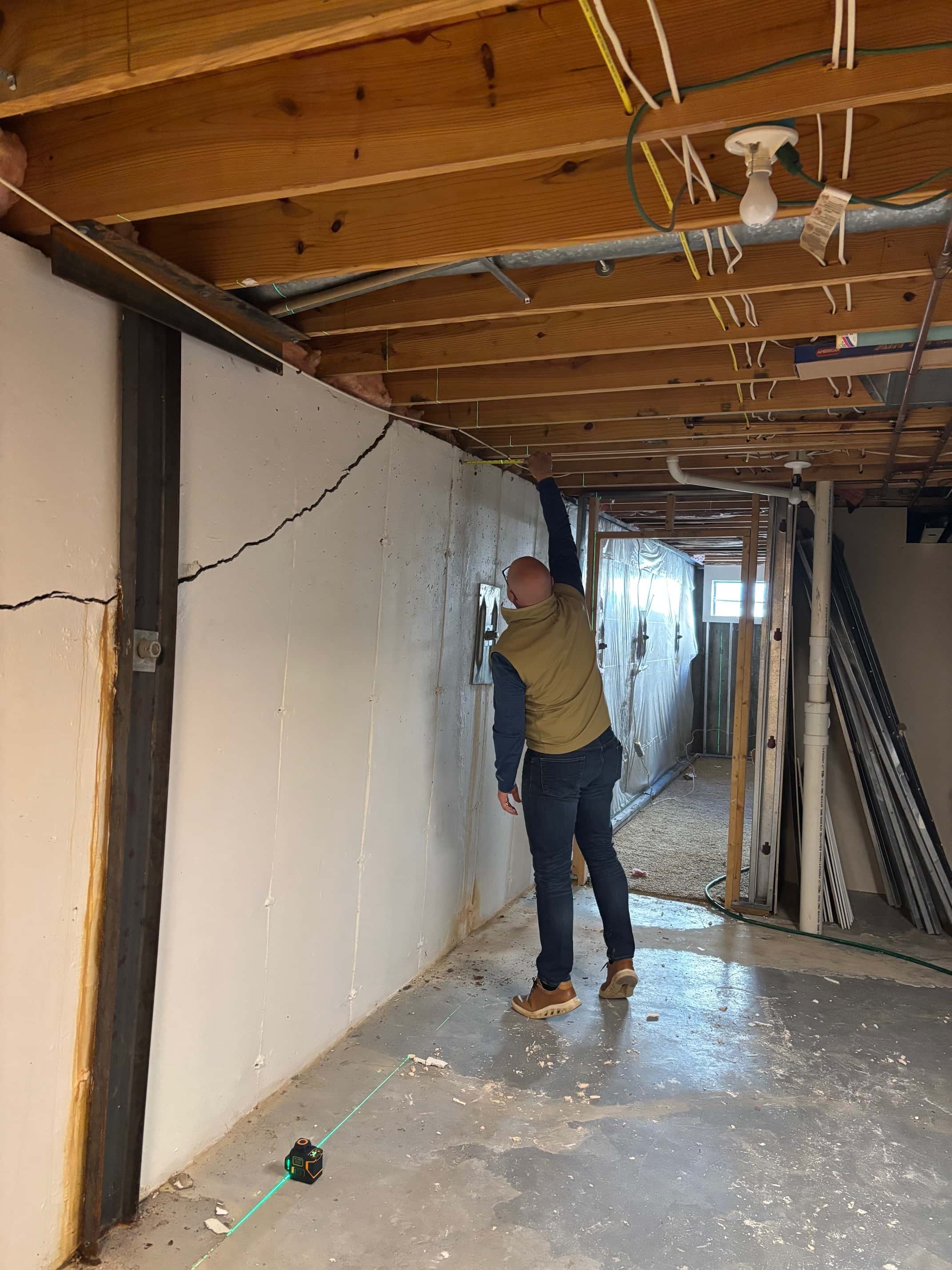
Most conversations about foundation cracks focus on the cracks themselves — what type they are, whether they are structural, and how they get repaired. What gets less attention is the underlying cause that makes St. Louis foundations particularly prone to cracking in the first place: the soil they sit in.
Missouri's clay-heavy soils shrink and swell with the seasons in ways that put continuous, cyclical stress on foundation walls and footings. Understanding that process — and why July is when it is most acute — is the context that makes sense of why new cracks appear, why existing ones grow, and why the timing of repairs matters.
What shrink-swell soil actually does
Clay soils expand when they absorb water and contract when they dry out. This is not a gradual, uniform process — it is a seasonal cycle that accelerates and reverses with precipitation and temperature. In St. Louis, that cycle is pronounced. Wet springs saturate the soil. Hot, dry summers pull the moisture out. Fall rains resaturate it again. This happens every year, and the cumulative effect on anything the soil surrounds — foundation walls, footings, slabs — builds over time.
The University of Missouri Extension's Missouri Soil Surveys identifies shrink-swell potential as one of the key characteristics that builders, real estate professionals, and land use planners need to evaluate when assessing homesites in Missouri. Soils with high shrink-swell potential require specific design accommodations — and in older St. Louis homes built before these standards were established, those accommodations were often not made.
The USDA's soil science documentation (efotg.sc.egov.usda.gov) notes that when a soil's linear extensibility exceeds a threshold of 3, shrinking and swelling can cause structural damage to buildings, and that special design is commonly needed. Many St. Louis area soils with high clay content meet or approach this threshold. It is not an unusual edge case — it is a baseline condition for a significant portion of the metro.
Why July is when the problem is most visible
By mid-summer, St. Louis has typically experienced weeks of heat and reduced precipitation. That sustained dry period pulls moisture out of the soil to a significant depth. As the clay contracts, it pulls away from foundation walls, sometimes visibly — the gap between the soil and the foundation that appears along the perimeter of a home in a dry summer is a direct expression of this process.
Two things happen as a result. First, the foundation wall loses the lateral support the soil normally provides. Second, when fall rains arrive and the soil rehydrates rapidly, the expanding clay pushes back against the wall with significant force. It is this repeated cycle of pressure-release-pressure that opens hairline cracks wider, initiates new cracks at points of existing stress, and over years contributes to the bowing and inward movement of foundation walls.
This is why St. Louis homeowners frequently notice new cracks in late summer and early fall that were not visible in spring. The soil movement that created them has been building through the dry season, and the return of moisture often makes the result visible for the first time.
How soil movement translates into specific crack patterns
Different types of soil movement produce different crack patterns, and the pattern is usually more informative than the crack itself. A brief overview is useful here — for a detailed guide to reading and evaluating specific crack types, see our post on foundation crack identification on the blog.
Uniform settlement across a foundation tends to produce vertical cracks in poured concrete as the concrete is pulled apart evenly. Differential settlement — where one section of the foundation moves more than another, which is common when clay content varies across a lot — produces diagonal cracks and stair-step patterns in block foundations. Lateral pressure from expanding clay pushing against the wall produces horizontal cracks, which are the most structurally significant category because they indicate the wall itself is being pushed inward.
The seasonal shrink-swell cycle contributes to all three patterns over time. A crack that began as a hairline vertical from normal concrete shrinkage can be widened year after year by the movement of the surrounding clay.
How to track whether your foundation is being affected
The most practical step a homeowner can take is to establish a baseline during a dry summer period and then compare it after fall rains return. Walk the perimeter of the foundation and look for the gap between soil and wall — its presence and width gives a rough indication of how much the soil is moving. Inside the basement, look for cracks that were not there last season, or existing cracks that appear wider than before.
Documenting with pencil marks and dated photos is the low-effort way to track change over time. Mark each end of any crack with a pencil line and a date, photograph it, and recheck after the next significant weather shift. A crack that grows beyond the pencil marks after a dry-wet cycle is showing evidence of active soil-driven movement.
The University of Missouri Extension's guidance on leaky basements reinforces the point that small cracks become larger ones when water moves through them repeatedly. Catching soil-driven movement while it is still minor is significantly less costly than addressing it after years of progression.
What this means for timing repairs
The shrink-swell cycle has practical implications for when foundation work is done. Repairs made during a dry summer period are addressing a foundation that is at or near peak stress — the soil has contracted and is no longer providing lateral support. That is actually useful diagnostic information: cracks visible in July reflect the full extent of dry-season movement and are not going to be understated by favorable soil conditions.
Carbon fiber reinforcement for bowing walls is typically installed when movement is still in its early stages. Waiting through additional dry-wet cycles allows further movement to accumulate, and walls that have moved significantly out of plumb require more involved repair than those caught early.
Quality Waterproofing + Insulation has been working in St. Louis foundations since 1955. We serve homeowners throughout Chesterfield, Creve Coeur, Kirkwood, Webster Groves, and the wider metro. If you have noticed new cracking this summer or have a foundation that has never been evaluated, schedule a free inspection at qualitywaterproofing.com/contact.
Read more articles
18 Jul 2024
The Cost of Ignoring Basement Waterproofing
If you skip out on waterproofing it, you might be setting yourself up for some serious headaches.

18 Jul 2024
5 Common Signs of Foundation Problems
Your home's foundation is like the backbone of the entire structure—it keeps everything standing strong and steady.
18 Jul 2024
5 Signs Your Basement Needs Waterproofing
Basements tend to be the first to feel the effects of unwanted water, and that can lead to all kinds of headaches.