Top Signs Your St. Louis Basement Isn’t Ready for Spring Storms
Is your basement ready for spring storms in St. Louis? Learn the warning signs of foundation problems, drainage issues, and moisture buildup before heavy spring rains hit.
Spring in St. Louis Brings More Than Warmer Weather
Spring in St. Louis is beautiful, until the heavy rains arrive.
Between Midwest storm systems, saturated clay soil, and sudden downpours, spring is one of the most stressful seasons for local basements. And unfortunately, many homeowners don’t realize their basement isn’t ready until water shows up where it shouldn’t.
We see the same pattern every year:
A small crack or drainage issue that went unnoticed in winter becomes a major leak once spring storms roll through.
Your home is too valuable to gamble on “hoping it holds up.” Let’s walk through the most important signs your St. Louis basement may not be ready for spring storms and what you can do now to prevent costly damage.
Why St. Louis Basements Are Especially Vulnerable in Spring
St. Louis homes face a unique combination of risk factors:
Expansive Missouri clay soil
Heavy spring rainfall
Sudden temperature swings
High groundwater levels
Older housing in many neighborhoods
Clay soil absorbs water quickly and expands, increasing pressure against foundation walls. According to the Perdue University, clay-rich soils common in Missouri significantly impact foundation performance due to moisture changes.
When soil expands and spring rain adds saturation, hydrostatic pressure builds and water looks for the easiest way inside.
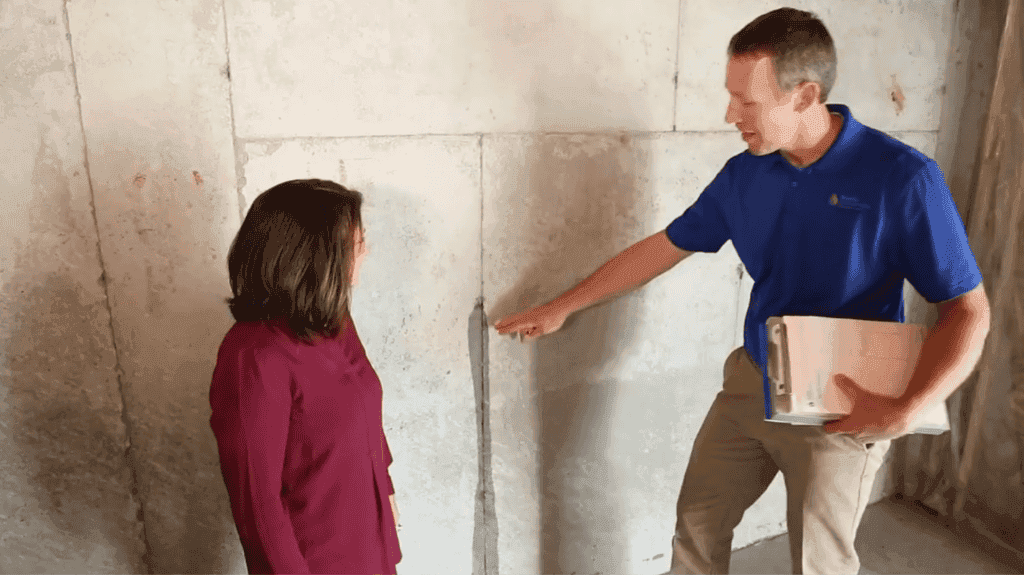
1. You’ve Noticed Small Foundation Cracks
Hairline cracks may not seem urgent in January. But by April?
They can become active leak points.
Watch for:
Vertical cracks widening
Stair-step cracks in block walls
Horizontal cracks (more serious)
Cracks with damp edges
Efflorescence (white powder residue)
Spring storms push water against foundation walls with force. Even small cracks can allow moisture intrusion under pressure.
👉 Learn more about crack repair:
If you’ve seen cracks this winter, spring is not the time to ignore them.
2. Your Basement Smells Musty
Musty odors are often the first warning sign of a moisture problem.
If your basement smells damp — even if you don’t see water — it likely means:
Hidden condensation
Minor seepage
Trapped winter humidity
Crawl space moisture rising upward
The U.S. Environmental Protection Agency (EPA) warns that persistent indoor moisture can quickly lead to mold growth and air quality concerns.
Spring humidity combined with rain only amplifies the issue.
3. You See Efflorescence on Walls
Efflorescence is a chalky white substance on concrete.
It forms when:
Water moves through concrete
Minerals are left behind as moisture evaporates
This is proof that water is already traveling through your foundation, even if it hasn’t leaked visibly yet.
Spring storms increase that moisture movement.
4. Your Sump Pump Hasn’t Been Tested Since Fall
Many St. Louis homeowners rely on sump pumps as their first line of defense during spring storms. But after weeks of below-freezing temperatures, your system may not be ready when you need it most.
Winter can quietly create problems like:
Frozen or partially blocked discharge lines
Stuck float switches
Sediment buildup in the pit
Power interruptions or tripped breakers
Battery backup failure
Because sump pumps often cycle less frequently in winter, issues can go unnoticed until the first heavy spring rain puts the system under pressure.
How to Test Your Sump Pump Before Spring Storms
Testing your sump pump now can prevent costly water damage later.
Here’s a simple homeowner check:
Pour a bucket of water into the sump pit.
The pump should activate automatically and discharge the water outside.
Listen for unusual noises.
Grinding, rattling, or delayed startup may signal wear.
Check the discharge line outside.
Make sure water is flowing away from your foundation and not pooling near the home.
Confirm backup power works (if installed).
Battery systems should be fully charged and ready.
If the pump does not activate, struggles to clear water, or sends water back toward the home, it’s time for professional service.
👉 Learn more about basement waterproofing systems and sump pump solutions
Why Testing Matters in St. Louis
Spring storms in St. Louis can bring heavy rainfall in a short period of time. When soil becomes saturated, hydrostatic pressure increases quickly, and sump pumps may need to run continuously during peak storms.
A pump that hasn’t been tested since fall may fail exactly when your basement needs it most.
Catching small issues now means avoiding emergency cleanup later.
5. Soil Is Pulling Away From Your Foundation
Walk around your home.
If you notice:
Gaps between soil and foundation
Low spots near the base of your home
Water pooling areas
Erosion near downspouts
You may have grading issues.
Spring rain will follow the path of least resistance, often straight toward your foundation.
6. Your Gutters and Downspouts Aren’t Directing Water Far Enough Away
In St. Louis, spring storms can dump inches of rain quickly.
Downspouts should extend at least 6–10 feet away from the foundation.
If they don’t:
Water saturates soil near walls
Pressure increases
Basement leaks become likely
Proper exterior drainage is one of the simplest ways to protect your basement before spring.
7. You’ve Had Minor Leaks Before
If your basement has leaked in previous springs, it will likely leak again, unless the root cause was addressed.
Temporary fixes don’t hold up under Missouri’s heavy seasonal rain.
Small issues compound over time:
Cracks widen
Drainage worsens
Pressure increases
Repairs get more expensive
Spring is when past problems resurface.
8. Your Crawl Space Is Damp
Many St. Louis homes have crawl spaces.
If moisture is present there, it:
Raises indoor humidity
Affects insulation
Impacts structural framing
Increases energy bills
Moisture moves upward. A wet crawl space contributes to basement and air quality issues.
9. You’ve Not Had a Foundation Inspection in Years
Homes settle. Soil shifts. Drainage changes.
What worked five years ago may not be enough today.
A professional inspection identifies:
Early-stage cracks
Drainage problems
Soil pressure signs
Waterproofing weaknesses
Catching problems early keeps spring storms from turning into expensive surprises.
Why Acting Before Spring Storm Season Matters
Waiting until water appears often means:
Emergency calls
Interior damage
Mold remediation
Flooring replacement
Structural repair
Prevention is always less expensive than restoration.
St. Louis spring storms are predictable. Basement leaks don’t have to be.
What Success Looks Like
When your basement is ready for spring storms, you’ll notice:
Dry foundation walls
Working sump pump system
No musty odors
Proper exterior drainage
Stable, crack-free walls
Most importantly?
Peace of mind.
You shouldn’t have to worry every time the forecast shows heavy rain.
Don’t Let Spring Catch You Off Guard
Your home is too valuable to risk water damage because of small issues that went unnoticed over winter.
At Quality Waterproofing + Insulation, we stop water problems before they become disasters, protecting St. Louis homes from foundation damage, moisture intrusion, and costly repairs.
Read more articles
18 Jul 2024
The Cost of Ignoring Basement Waterproofing
If you skip out on waterproofing it, you might be setting yourself up for some serious headaches.

18 Jul 2024
5 Common Signs of Foundation Problems
Your home's foundation is like the backbone of the entire structure—it keeps everything standing strong and steady.
18 Jul 2024
5 Signs Your Basement Needs Waterproofing
Basements tend to be the first to feel the effects of unwanted water, and that can lead to all kinds of headaches.